From Bad Translation to Legendary Catchphrase
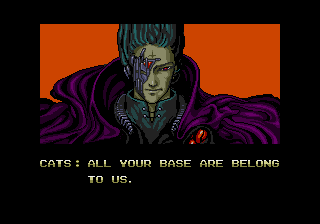
“All your base are belong to us” comes from the opening cutscene of the Japanese game Zero Wing, released on the Sega Mega Drive in Europe in 1991. The English localization was done by a non-native speaker, which produced a series of awkward and hilarious lines. One of them was the villain CATS announcing that “All your base are belong to us,” instead of something like “we have taken over all your bases.”
For several years this was just one more example of English in a niche game. The phrase became a meme only when players started sharing screenshots and transcripts on fan forums. Sites that collected amusing quotes from games, like early web forums and quote pages, helped the line circulate among gamers who had never actually played the original title.
GIFs, Flash, and a Remix Explosion
Around 1999 and 2000, the phrase left the world of simple screenshots and became a full multimedia meme. Fans created animated GIFs of the cutscene and, eventually, a Flash music video that remixed the dialogue with a techno track. The best-known version, hosted on Newgrounds, rapidly spread as viewers linked it on forums and personal sites and mirrored it to other servers in case it went down.
The Flash remix escalated the joke by editing the phrase into photographs of real-world landscapes, billboards, and news footage. This mashup style made “All Your Base” into more than just a quote: it became a format. People began photoshopping the phrase into their own images, or staging real-life versions of it on signs and banners. It turned into an early example of participatory culture, where fans and ordinary users played with the meme as a shared inside joke.
Inside Joke, Outside World
Part of what made “All Your Base” so satisfying is that it sounded like a threat delivered in broken English. In the early 2000s, mainstream media often treated the phrase as a mysterious hacker slogan, even when it was just nerds making references. At one point, pranksters placed signs with the phrase around a town as an elaborate April Fools’ joke, and local authorities briefly worried it might be some kind of coded threat.
The meme has reappeared in all kinds of places since then: on T-shirts, message boards, social media posts, and even in political tweets and big video game franchises. Each new appearance works like a wink at people who remember the original or have absorbed it through meme history.
Taken together, the Dancing Baby and “All Your Base” show two sides of early meme culture: visual spectacle and textual remix. Both spread through slow, manual sharing, but they invited people to participate and reshape them, which is exactly what continues to happen in meme ecosystems today.